
German Law Permits Parents to Change Sex of Babies on Birth Docs, Punishes “Deadnaming”
The German parliament passed a law that permits parents to change the sex of newly born children on their birth certificates. ...
The German parliament passed a law that permits parents to change the sex of newly born children on their birth certificates. ...
On April 19, former Russian President Dmitry Medvedev declared that recent Polish claims about the arrest of a man allegedly planning to kill...
Read more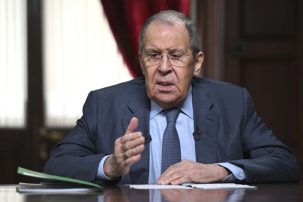
On April 19, during an interview with Russian radio stations Sputnik, Komsomolskaya Pravda, and Govorit Moskva, Russian Foreign Minister Sergey Lavrov said that...
Read more
The New American magazine has been invited to cover the Make Europe Great Again (MEGA) conference, which will take place in Bucharest, Romania,...
Read more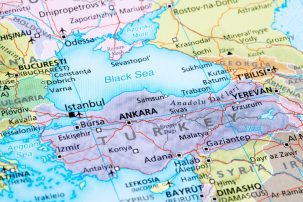
On April 16, news outlet Reuters reported, citing four sources acquainted with the matter, that although Ukraine and Russia had been in talks...
Read more
Two Swiss homosexuals are accused of sexually abusing two 17-year-olds who joined an organization aimed at “helping” youngsters who think they are “LGBTQ+.”...
Read more
If you still have any doubt that climate zealots wish to take away the planet’s freedom, consider a recent proposal by German Minister...
Read more
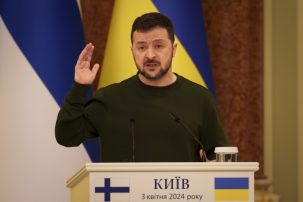
On April 13, Ukrainian President Volodymyr Zelensky declared that Iran’s strike on Israel was a “wake-up call” for Washington to continue backing its...
Read more
Retired U.K. General Sir Richard Barrons told the BBC that Russia could defeat Ukraine in 2024, and that there is “a serious risk”...
Read more
A recently published report titled “Non-European Foreigners and Social Housing in France” regarding France’s social-housing system (HLM) contended that sub-Saharan African migrants benefited...
Read more
On April 9, German Foreign Minister Annalena Baerbock conceded that while Ukraine desperately needs more air defense missiles, Berlin’s supply of Patriot missiles...
Read more
During a Forum Europa gathering in Brussels on April 9, the EU High Representative for Foreign Affairs and Security Policy, Josep Borrell, posited...
Read more
The European Union is threatening member nations that do not cooperate with its new migrant pact, prompting pushback. ...
Read more
Tuesday’s ruling from the European Court of Human Rights (ECHR) that the Swiss government was, essentially, guilty of human-rights abuses for not taking...
Read more
Even as conflict continues on the battlefields of the Ukraine, the war is being raged simultaneously on another front: In the courtrooms. The...
Read more