Europe
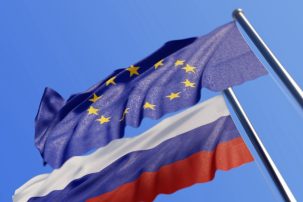
NATO to Resume Talks With Russia
Written by Super UserNATO to Resume Talks With Russia
by Warren Mass
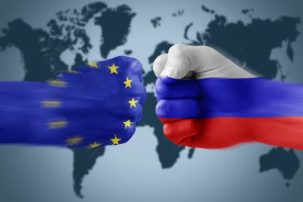
NATO Secretary General Jaap de Hoop Scheffer announced on December 2 that the alliance has agreed to a "conditional and graduated re-engagement" with Russia. The top NATO official said that talks with Moscow, which were halted when Russia invaded Georgian territory last August, would resume.
The BBC reported De Hoop Scheffer's statement that all previous decisions made by NATO heads of state concerning Georgia and Ukraine would remain intact. Though the secretary general said "That includes very much that they will one day be members, if they so wish of course, and important to add, when they meet NATO standards," the BBC's Brussels correspondent predicted that neither country will become a NATO member in the foreseeable future.
De Hoop Scheffer said at a news conference that the 26 NATO member states had requested that he explore reopening discussions with Russia and that meetings of the NATO-Russia Council - suspended since the Georgia crisis - would resume on an informal basis.
He announced: "Allies agreed on what I would qualify as a conditional and graduated reengagement with Russia," reported Reuters news service.
According to the U.S. State Department website: "Representatives from Moscow first took part in meetings at NATO in 1991, as part of the North Atlantic Cooperation Council (NACC). In 1997, the NATO-Russia "Founding Act" established a NATO-Russia Permanent Joint Council (PJC). The PJC held its last meeting in Reykjavik on May 14, 2002." However, the formal establishment of the council is considered to be a meeting in Rome in 2002 when President Bush and NATO heads of government met with then Russian President Vladimir Putin. At that meeting, President Bush called the establishment of the council: "an historic achievement for a great alliance and a great European nation. Two former foes are now joined as partners, overcoming 50 years of division and a decade of uncertainty. And this partnership takes us closer to an even larger goal: a Europe that is whole, free and at peace for the first time in history."
In a statement made to the Interfax news agency, Russia's envoy to NATO, Dmitry Rogozin, said Moscow would weigh the NATO statement before responding in kind: "It is natural that Moscow will analyze the results that we receive today and will receive tomorrow very carefully," he said. "After that Russia's official reaction will be made public."
Several of NATO's European members, including France, Italy, and Germany, have favored the resumption of closer ties with Russia, which is a major supplier of Europe's oil and natural gas. The German foreign minister, Frank-Walter Steinmeier, said at NATO headquarters that "we must now look for ways of returning to dialogue with Russia because it's especially in difficult phases of our common ties that we need means of holding discussions."
Similar sentiments were expressed by the Italian foreign minister, Franco Frattini, who said: "The time has come to resume negotiations" with Russia, However, the United States has been more reluctant to resume business as usual, following Russia's intervention in Georgia, whose government has firm U.S. backing. Secretary of State Condoleezza Rice, who is attending her last meeting of NATO foreign ministers, told reporters: "We should be very attentive to what the Russians are doing and are they living up to their obligations. There are certain types of activities, like military-to-military contacts, that seem to me to be problematic, when the Russian military is sitting in Georgian territory, in the separatist regions" of South Ossetia and Abkhazia, Russia has unilaterally recognized the breakaway provinces as independent countries.
"I don't think that this is in any way business as usual," Secretary Rice was quoted by AFP news. This isn't an issue of isolating Russia but it is an issue of what kinds of contacts are appropriate. I think this is a completely appropriate thing for the alliance to do,"
The International Herald Tribune reported that simultaneous with the NATO meeting, the European Union, also meeting in Brussels, resumed its own talks with Moscow on the matter of forming a strategic partnership. As with NATO-Russian high-level discussions, the EU-Russian talks were also talks were suspended for nearly three months following Moscow's military intervention in Georgia and its refusal to withdraw its troops from the disputed areas.
The Swedish welfare state is far from successful when it comes to integrating immigrants into its economy. Among first-generation immigrants from non-industrialized countries, less than half the adults are active in the labor market. Welfare dependency is nine times higher amongst this group compared to the rest of society.
Is the New York Times "airbrushing" history again? It would seem so. On Saturday, November 22, Ukrainian President Viktor Yushchenko presided over a commemoration in Kiev of the 75th anniversary of the famine genocide of 1932-1933 that took the lives of 7-10 million Ukrainians. Known as the Holodomor (Ukrainian for "murder by hunger"), it is one of the greatest mass murders in history, and one of the cruelest. Joining President Yushchenko for the event were official delegations from 44 countries, including the presidents of Poland, Lithuania, Estonia, Macedonia, Georgia, Latvia, Bosnia, and Herzegovina.
For many of us, memories of the Cold War and of Russia's predecessor Soviet government may have fostered a natural inclination to sympathize with Georgia during its recent conflict with Russia. But a report published by the New York Times for November 7 offers some additional food for thought. Not that Russia has escaped the grip of the old KGB-controlled nomenklatura; it hasn't. But Georgia has not become pristine either.
Overseas Reaction to Obama Win
Written by Super User
Reaction from foreign leaders and citizens to the winning of the U.S. presidency by Democrat Barack Obama has been largely favorable, judging from several overseas-based news sources. The BBC quoted French President Nicolas Sarkozy, who said: "At a time when we must face huge challenges together, your election has raised enormous hope in France, in Europe and beyond." Sarkozy continued: "France and Europe ... will find a new energy to work with America to preserve peace and world prosperity."