AIPAC Spent $55 Million This Election Cycle on Losing Candidates, but Will Still Heavily Influence Congress
The Israel-First American Israel Public Affairs Committee took a beating in Tuesday’s midterm election, but the $55.3 million it spent on losing candidates won’t likely affect its virtual control of Congress.
Tuesday’s result stupefied AIPAC in particular, and the Israel Lobby in general, notably because of its role in defeating America First GOP Representative Thomas Massie of Kentucky in his primary against Israel-First candidate Ed Gallrein.
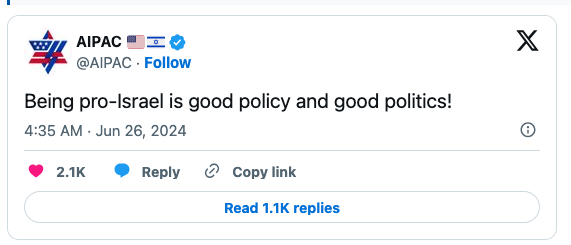
Indeed, AIPAC frequently brags on X that “being pro-Israel is good policy and good politics!” and crowed after Massie’s defeat that public officials will only “briefly” disagree with AIPAC before it destroys them.
While two-thirds of the almost $85 million it spent to buy seats in Congress went to losers, AIPAC notes that almost 250 of its supported candidates prevailed.
The Report
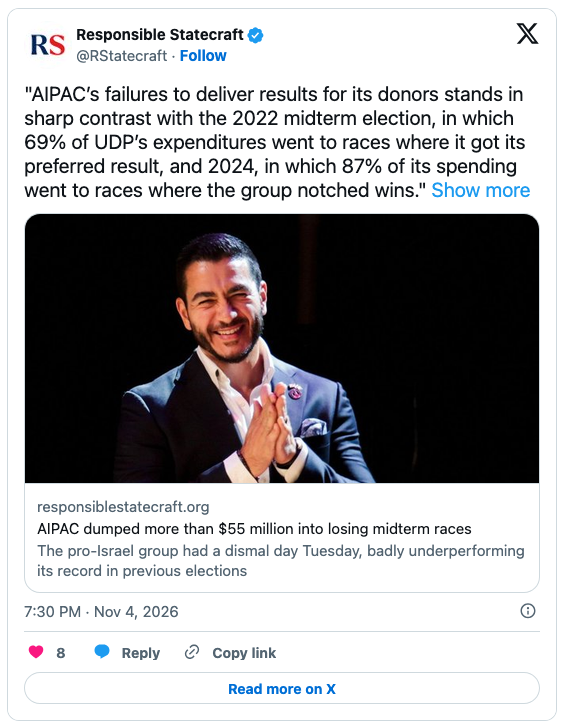
Responsible Statecraft’s Eli Clifton surveyed the wreckage, finding that two-thirds of what AIPAC spent went to losers.
Noting that AIPAC has said nothing much about the election, Clifton reported that AIPAC spent $84.1 million through its super PAC, United Democracy Project (UDP), and other such PACS.
AIPAC observed radio silence immediately after the election, which was largely a referendum on the war in Iran.
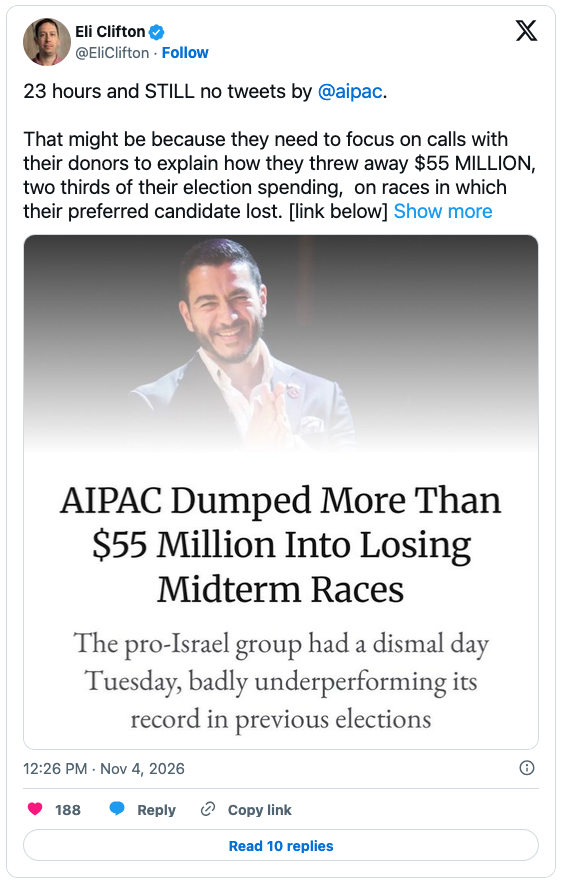
“AIPAC might be silent today because they need to explain to their donors how nearly-two-thirds, or $55.3 million, of that spending went to races in which the group’s preferred candidate lost,” Clifton wrote on Wednesday:
A failure to achieve the desired results from two-thirds of its political spending will be a tough reality to present to donors, especially when AIPAC repeatedly claims that “being pro-Israel is good policy and good politics.”
Tuesday’s defeat, Clifton continued, starkly contrasts with 2024 and 2022, when 87 percent and 69 percent respectively of UDP’s loot went to winning candidates.
The biggest loss for the AIPAC cutout was in Michigan, where it failed to defeat an openly antisemitic Muslim lunatic.
“UDP’s two biggest races were massive losses for the group and its donors, eating up $37.78 million in spending,” Clifton wrote:
In Michigan, UDP spent $31.47 million in a failed effort to prevent Democratic Senator-elect Abdul El-Sayed’s primary and general election victories.
The next biggest spending target was an effort to prevent Daniel Biss’s primary victory over Laura Fine in Illinois’s 9th congressional district. UDP ultimately spent $6.31 million in the failed effort.
The largest successful investment by the group came in Maryland’s 5th congressional district, where the group scored a win with $5.73 million in support of Adrian Boafo in the Democratic primary.
The Michigan defeat is particularly significant given the role Israeli agents played in GOP incumbent Senator Mike Rogers’ campaign, and his endorsement from Israel-First Democrat Haley Stevens.
Two campaign operatives were registered foreign agents for Israel who might have had access to sensitive intelligence had Rogers won and they joined his staff.
The AIPAC Tracker reported that pro-Israel political action committees have donated $226,419 to Rogers. Independent expenditures are a whopping $31.4 million.
Stevens has collected about $1.4 million in donations. Independent expenditures: $34.9 million.
AIPAC Claims Victory
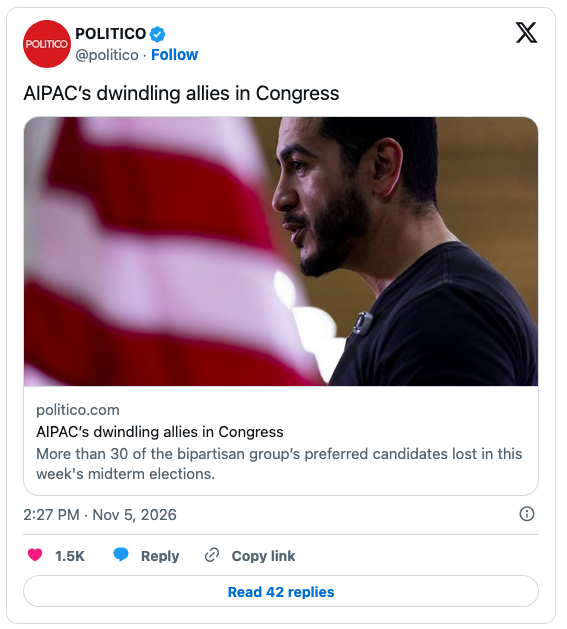
Politico offered more details on AIPAC’s losses. Thirty of its candidates “fell this week — marking defeat for AIPAC in over three-fourths of the competitive races that have been called so far where it backed an incumbent,” the website reported:
That includes ousted GOP Reps. Mike Lawler in New York, Brian Fitzpatrick in Pennsylvania and Max Miller in Ohio.
The pro-Israel group also lost one of its most influential allies in the Senate when Maine Democrat Troy Jackson trounced incumbent Republican Susan Collins, the powerful appropriations chair. AIPAC bundled over $3.3 million in contributions for Collins this cycle, more than it gathered for any other candidate. …
The pro-Israel group, long a formidable force in electoral politics, has faced a reckoning in recent months amid significant voter unease over the U.S.-Israel relationship. In the latest POLITICO Poll, 34% of U.S. adults said the U.S. is too closely aligned with Israel’s government.
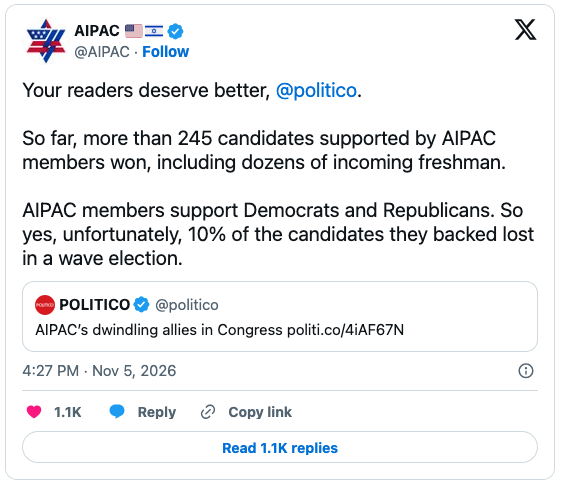
AIPAC responded to Politico on X.
“So far, more than 245 candidates supported by AIPAC members won, including dozens of incoming freshman,” the outfit reported:
AIPAC members support Democrats and Republicans. So yes, unfortunately, 10% of the candidates they backed lost in a wave election.
Massie Brag
In no race has the Israel Lobby’s influence been more apparent than Massie’s race against Gallrein. President Donald Trump jettisoned Massie over his refusal to support the war in Iran and push to fully release the Epstein files.
The lobby openly boasted about its buying yet another American legislator, although this transaction invited exactly zero complaints about “foreign election interference.”
The Massie-Gallrein contest was the most expensive primary in history. Total spent: $35 million, with $15,522,757 coming from the Israel Lobby alone: $63,898 in donations, and $15,458,859 in independent expenditures.
Massie received nothing.
After his defeat, AIPAC posted a warning to those who challenge its supremacy on Capitol Hill.
“Congressman Massie’s defeat set a clear precedent,” the outfit wrote:
Elected officials are free to disagree with us, but only briefly.
The post received 31 million views before AIPAC deleted it.

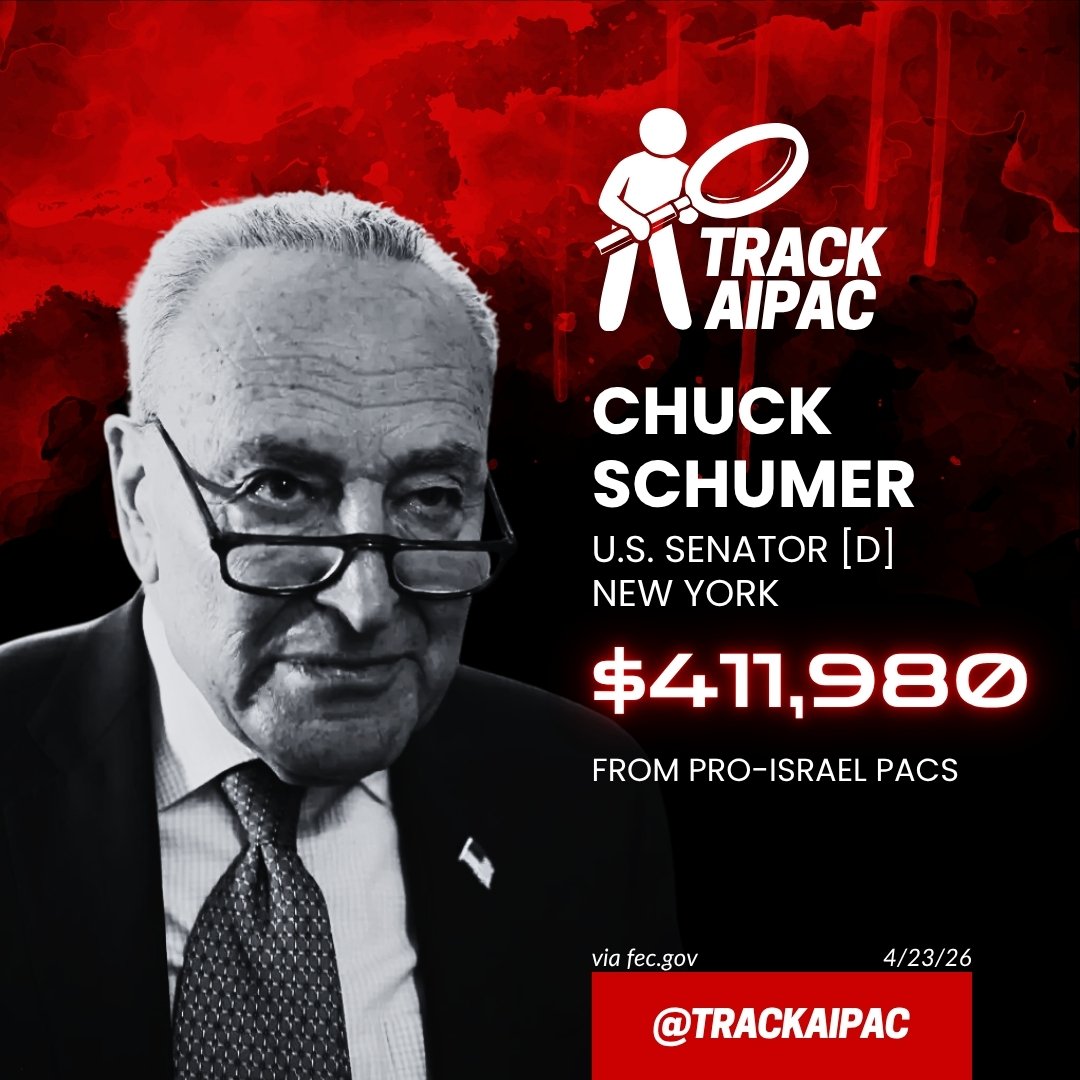
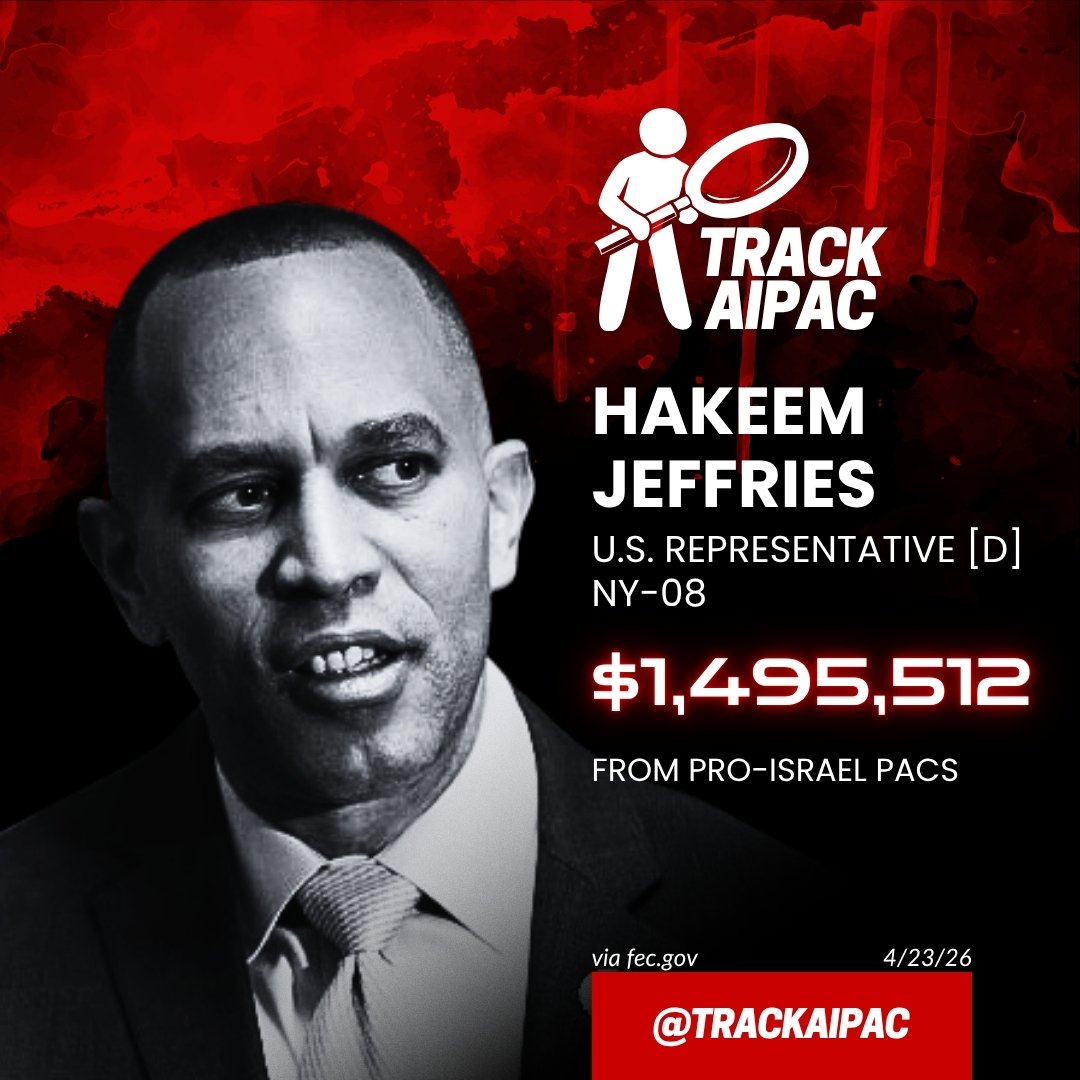
Despite Tuesday’s losses, AIPAC has nothing to worry about. The vast majority of legislators are AIPAC-controlled, notably the incoming leaders of the House and Senate, New York Democrats Hakeem Jeffries and Chuck Schumer.
AIPAC Tracker reports that Jeffries has collected almost $1.5 million from the Israel Lobby. Schumer has received a little more than $411,000.
As well, WhoFundsMyRep.com reports, 518 of Congress’ 539 members — 268 Republicans and 247 Democrats — received AIPAC money in 2026. Democrat Haley Stevens received $15.86 million.